Inventory visibility across locations: how to fix one of purchasing’s biggest blind spots

If you’re managing stock across multiple warehouses or depots, you’ll know the balancing act all too well. One site runs out while another sits on piles of slow movers, eating into your margins. Teams spend hours reconciling spreadsheets to work out what you actually have and where.
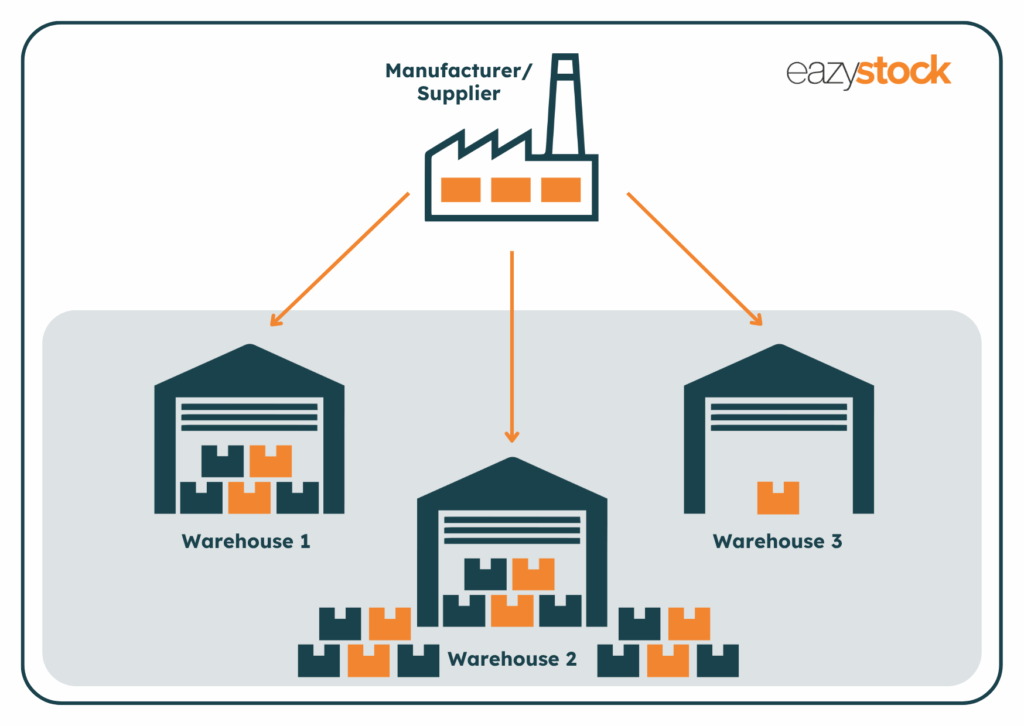
The problem isn’t the stock itself. It’s visibility. When you can’t see the whole picture, every purchasing decision becomes a guess, and the cost of those guesses adds up fast.
Why visibility matters more than you think
Multiple stock locations are meant to give you flexibility. However, if you don’t have a clear, single view of inventory, they create the opposite: inefficiency, firefighting, and working capital tied up in the wrong places.
Even with an enterprise resource planning system (ERP), gaps can arise from different product codes per site, data delays, and siloed spreadsheets. That lack of clarity makes forecasting harder, supplier conversations weaker, and planning less confident.
The result? The same two problems we hear from almost every multi-location business: stockouts in one place, overstock in another. Both drain profit and trust in equal measure.
The hidden cost of poor visibility
When you’re flying blind, the pain hits every part of the operation.
- Purchasing teams spend more time firefighting than planning, constantly chasing data instead of acting on it.
- Warehouse staff deal with last-minute transfers and rush orders, driving up handling and freight costs.
- Finance see cash locked up in surplus stock “just in case”, while Sales lose revenue when items go out of stock.
- Customers feel the impact, facing delays, backorders, and inconsistent service – which can quickly damage trust.
- Supplier relationships take a hit because conversations are reactive, driven by panic orders rather than planned demand.
It’s not just inefficiency; it’s opportunity lost. Every hour spent reconciling spreadsheets is an hour not spent negotiating better terms, improving supplier performance, or strategically managing capital.
This is why visibility isn’t just a “nice to have”. It’s a core driver of purchasing accuracy, operational efficiency and profitability.
How EazyStock helps
The reason multi-location stock visibility is so hard isn’t a lack of effort; it’s a lack of one reliable source of truth.
EazyStock integrates with your ERP and automatically pulls daily stock, sales and purchasing data from every site into a single, clear view.
EazyStock automates demand forecasting, incorporating advanced statistical calculations and algorithms to maintain forecast accuracy. Throughout each forecast period, it tracks actual demand and sends alerts when there are significant deviations. This allows you to act quickly and prevent stockouts or excess inventory from building up.
At the end of a forecast period, EazyStock also highlights any extreme forecasting variances, e.g. demand outliers, so that the cause can be investigated and future forecasts adjusted accordingly.
When it comes to replenishment, EazyStock removes the manual work and guesswork. It calculates all reordering policies and automatically adjusts them to changes in demand forecasts, stocking rules, target service levels and supplier lead times.
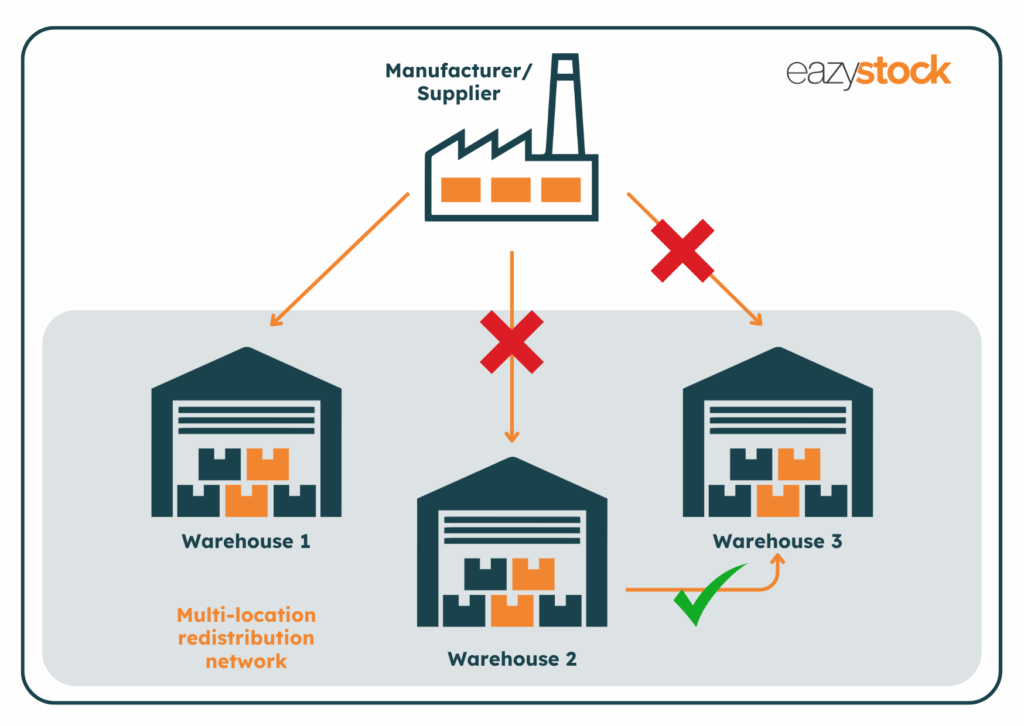
As a result, reordering becomes market-led and reacts to customer behaviour (or production requirements) and supplier performance. Crucially, it looks at your whole network – considering stock transfers between locations before recommending new purchase orders. That unified picture gives you the confidence to:
- See exactly what you have, where, and what’s at risk
- Balance stock between locations instead of over-ordering
- Set data-led reorder points for every site
- Plan proactively instead of firefighting.
It’s not about adding another layer of admin, it’s about removing the guesswork and letting your team focus on high-value decisions.
For ForgeFix, that clarity turned disconnected data into smarter purchasing and record service levels. For your team, it can be the difference between managing stock and optimising it.
What happens when you fix it
ForgeFix faced this exact challenge: stock spread across warehouses and no single source of truth. Their team was constantly reacting rather than proactively planning.
With EazyStock providing a cohesive view across all sites, they could balance stock levels and make more confident purchasing decisions.
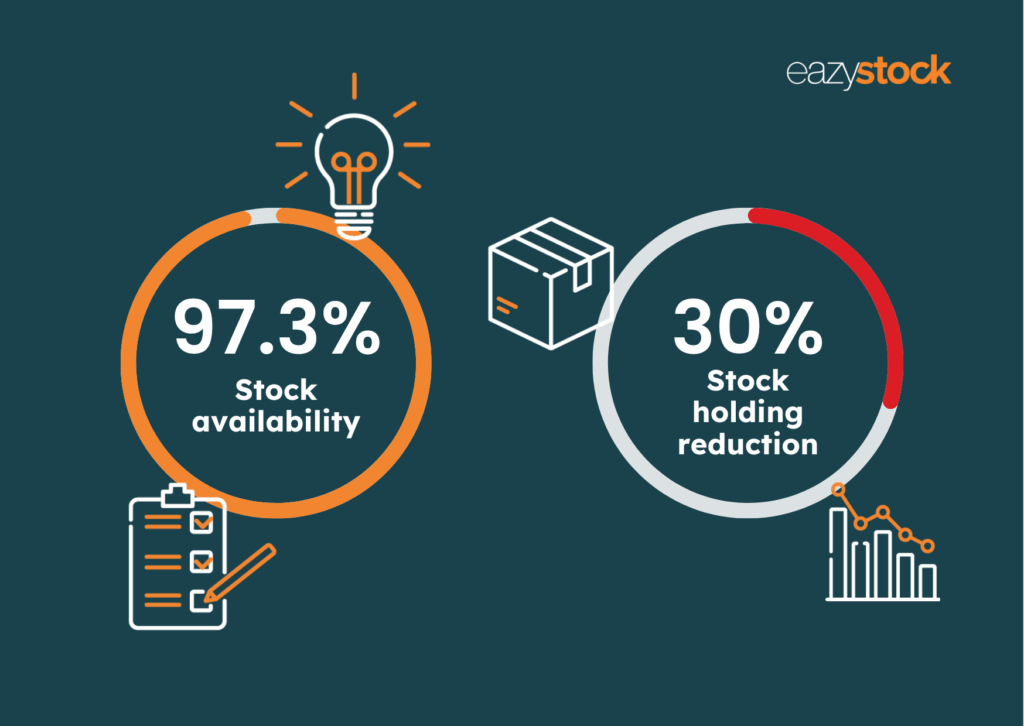
- Total stock holding dropped by more than 30%, freeing cash tied up in excess inventory.
- Stock availability climbed to its highest level in years, keeping products consistently on hand for customers, even with holding 30% less stock.
- Costs were cut in half by redistributing stock between warehouses instead of reordering.
- Manual admin dropped dramatically, giving the team more time to focus on analysis and planning.
- Out-of-stocks became less frequent and shorter.
For ForgeFix, better visibility didn’t just improve the numbers. It gave their team the space and confidence to manage inventory proactively rather than constantly firefighting.
Ready to see your whole inventory picture?
With the right visibility, managing multi-location stock doesn’t have to mean multi-location headaches. It can free up cash, improve service levels, and give your team time to focus on high-value work that moves the business forward.