Home Inventory Optimisation Inventory planning software

Inventory planning software

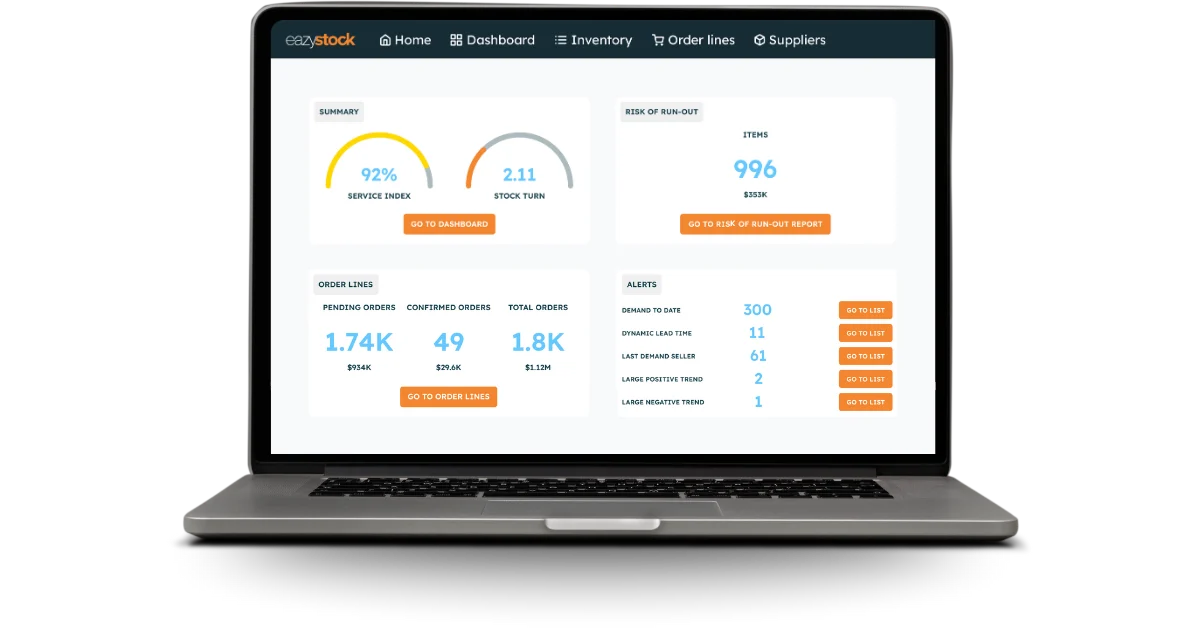
Inventory planning determines what stock a business needs, how much to order and when to replenish. It involves forecasting demand, setting stock levels and managing supply constraints. Software automates calculations, improves accuracy and helps balance product availability with lower costs.
Results our users see from using inventory planning software

0
Average cash flow improvement
0
Average reduction in stockouts
0
Stock level or value reduction
0
Average reduction in excess inventory

Inventory planning features

  • Automated inventory classification
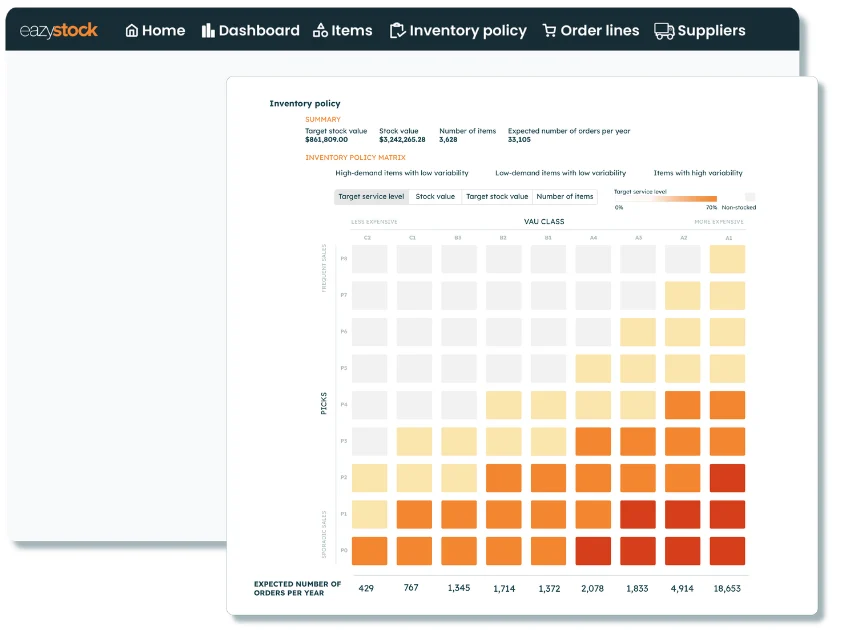
    Items are classified by demand type, usage value, pick frequency and demand volatility.
  • Dynamic stock adjustments
    Daily, AI-powered calculations consider demand history, forecasts, supplier constraints and existing stock levels.
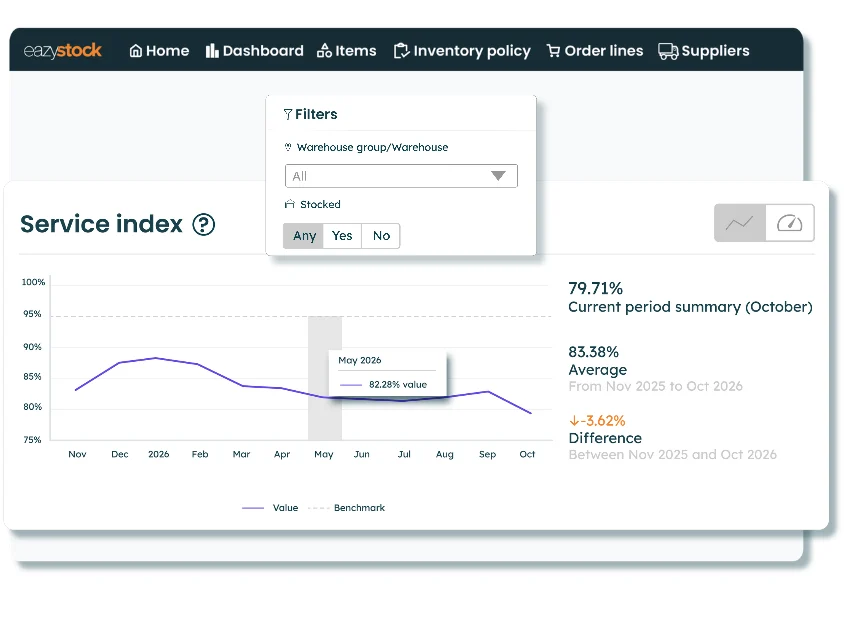
  • Stock-health visibility
    Dashboards and screens display stock profiles to show healthy, excess, slow-moving and obsolete items.

Additional inventory planning software features:

What-if scenario planning

Assess how changes could affect availability, investment, cash flow and service levels.
Forecasting models icon for demand forecasting software

Automatic replenishment calculations

Including reorder points, order quantities, safety stock levels and service-level targets.
Collaboration and integration puzzle icon

ERP integration

Import key inventory, supplier and sales data to get accurate recommendations.
EazyStock automated inventory replenishment suggestions and recommendations

Automated replenishment recommendations

These can be automated or checked. Supplier order proposals can be sent ahead of placing an order for suppliers to plan.
Inventory optimisation icon UK GBP

Inventory optimisation

Inventory optimisation balances inventory levels with demand to minimise capital investment and reduce the risk of stockouts and excess stock.

Supplier management

Use accurate supplier and lead time data to improve purchasing decisions and help ensure stock arrives when it’s needed.
EazyStock multi-location inventory planning icon

Multi-echelon/location

Optimise inventory distribution across multiple warehouses, branches, or locations to improve availability without holding unnecessary stock.

Inventory policy

Set smarter stocking policies based on demand, item importance, and service-level goals, so you invest in the stock that matters most.
When you’re managing stock manually, with the best will in the world, something’s going to go wrong. This year has been the first time we haven’t had any big shocks, thanks to EazyStock’s calendar and the ability to factor in factory closures. It’s sorted it.
Ian Homer, Purchaser, Deligo

Benefits of better inventory planning

Image-13@2x
  • Improve stock availability and service levels by holding the right products to satisfy customer demand.
  • Reduce excess and obsolete inventory by identifying surplus and slow-moving stock before it becomes costly.
  • Free up working capital by carrying more of the stock you need and less of the stock you don’t need.
  • Lower inventory costs and waste by aligning inventory levels with demand, reducing unnecessary storage, handling, and write-off costs.
  • Save time by automating manual planning and replacing time-consuming manual calculations.
  • Gain clearer visibility into inventory health to quickly identify healthy, slow-moving and obsolete items.
  • Make better purchasing decisions by using data to create accurate forecasts, monitor demand volatility, and order the right quantities.
  • Test scenarios before changing investment or service levels to assess the potential impact on availability and cash flow.

How EazyStock supports inventory planning

EazyStock forecasts demand to help businesses determine exactly how much stock to order and when.

How EazyStock’s inventory planning works

  • 1. Connect to your ERP
    Bring inventory, sales, purchasing and supplier information together from your ERP system.
  • 2. Analyse demand
    Understand what stock you’ll need and when you’ll need it.
  • 3. Optimise inventory policies
    Factor supplier lead times, order schedules, minimum quantities, price breaks and availability into your inventory planning.
  • 4. Automate smarter order recommendations
    Generate purchasing recommendations that balance stock availability, supplier constraints and inventory costs.
Illustration visar svåra beslut vid varupåfyllnad

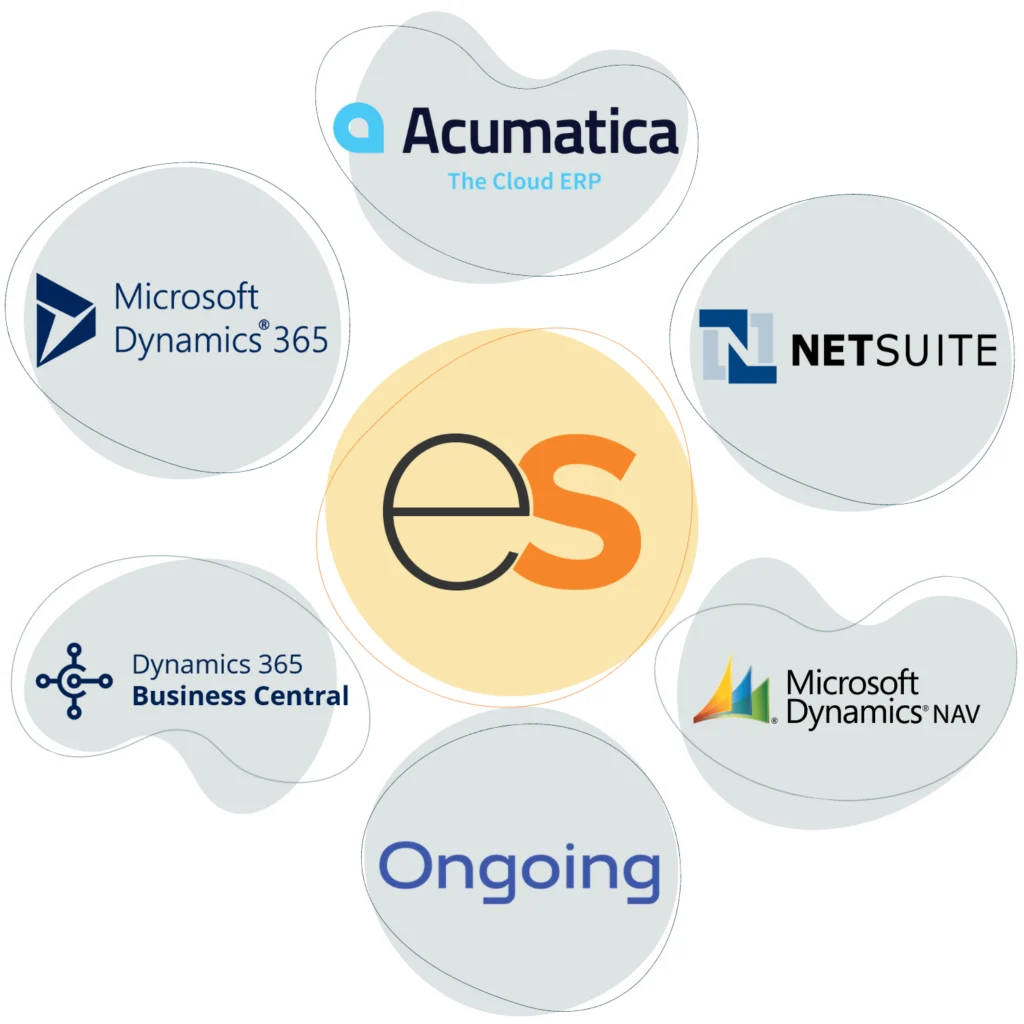
EazyStock integrates seamlessly with any ERP

Enhance your inventory operations and unlock the full potential of your ERP sales and inventory management. With pre-built ERP connectors, our team can get you started instantly.

  • Go live in one week
  • Pre-built connectors to leading ERPs
  • Data migration support
  • Dedicated customer success manager
  • Full onboarding

Already trusted by 100s of SMEs

See how we’ve helped our customers

Charter Controls improve inventory visibility and boost cash flow

Charter Controls moved beyond spreadsheets to automated inventory planning, achieving 95% service levels, stronger cash flow and more proactive purchasing.

Daylong Direct boosted sales by 120% while cutting excess stock by 54%

Daylong Direct replaced manual, paper-based planning with automated forecasting and replenishment, gaining full stock visibility and control.

Flexitog logo over background image

FlexiTog achieves 98% fewer stockouts and 99.98% availability with EazyStock

FlexiTog has been a stalwart in safety apparel, specialising in protective clothing for cold temperatures since it was established in…

FAQs about inventory planning software

Inventory planning determines what stock to hold, how much to order, and when to replenish it to meet demand cost-effectively.

Inventory planning focuses on anticipating stock requirements, whereas inventory management covers the broader processes of ordering, receiving, storing, tracking and controlling inventory.

Key data includes sales history, current stock levels, demand patterns, supplier lead times, ordering constraints, costs, and target service levels.

Demand forecasting estimates future requirements, helping businesses order sufficient stock to meet demand without creating unnecessary excess.

Reorder points are based on expected demand during the supplier lead time and the safety stock required to cover uncertainty. Minimum and maximum stock levels help set suitable replenishment boundaries.

Long or unreliable lead times may require earlier ordering and additional safety stock. Minimum order quantities and values also influence recommended order sizes.

Seasonality and promotions can temporarily shift demand, so adjust forecasts and replenishment plans before, during, and after these periods.

Inventory planning aligns stock levels with forecast demand, helping businesses maintain product availability while reducing surplus, obsolescence and unnecessary investment.

Demand, stock levels and service targets should be assessed by location. Existing inventory should also be considered for redistribution before ordering additional stock.

Inventory planning software imports sales, stock, and supplier data from an ERP, performs advanced calculations, and returns forecasts, inventory policies, and replenishment recommendations.

See EazyStock in action

Get a live demo from one of our inventory experts!


Optimise inventory across every location

Gain greater visibility into stock and demand across your network, improve inventory allocation and make better replenishment decisions with EazyStock.

Request a demo

Please fill out the fields below

"*" indicates required fields

This field is for validation purposes and should be left unchanged.
Country*
Consent*

By submitting this form, I agree to the storing and processing of personal data by Syncron as described in the Terms of Use and Privacy Policies.

Explore EazyStock with a personalised demo