Not every item in your inventory should be managed in the same way. Different products have different demand patterns, business value and availability requirements.
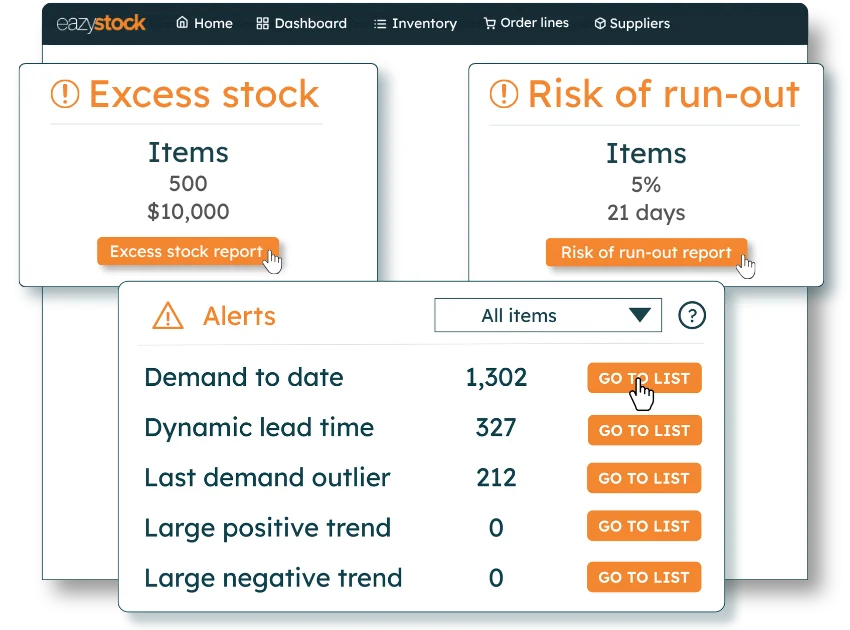
EazyStock helps you create inventory policies that reflect these differences. Items are automatically classified based on factors such as demand type, usage value, pick frequency, and volatility, helping you set appropriate service levels and stocking rules for different product groups. As conditions change, classifications and optimal stock levels are updated to keep your inventory strategy aligned with demand.
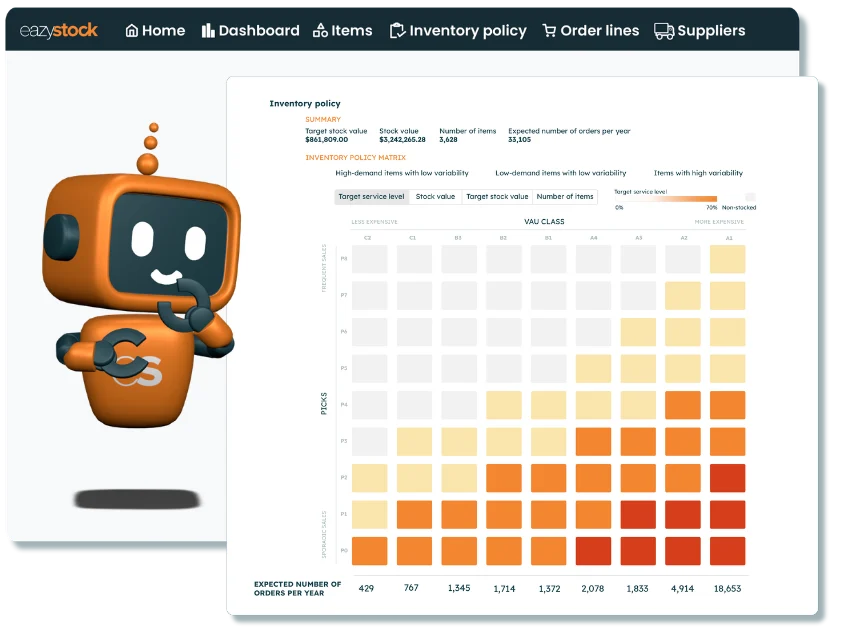
EazyStock automatically classifies your inventory and optimises stocking rules, so you can invest in the products that matter most while keeping stock levels under control. You can manage inventory according to the characteristics and importance of individual items, rather than applying a one-size-fits-all policy across your entire product range.
Enhance your inventory operations and unlock the full potential of your ERP sales and inventory management. With pre-built ERP connectors, our team can get you started instantly.
An inventory policy sets out how a business decides which products to stock, how much inventory to hold and when to replenish stock. It can include rules on product classification, service levels, safety stock and reorder points.
A clear inventory policy helps businesses balance product availability with inventory investment. Rather than treating every item the same, policies can reflect differences in demand and importance, reducing unnecessary stock while safeguarding availability.
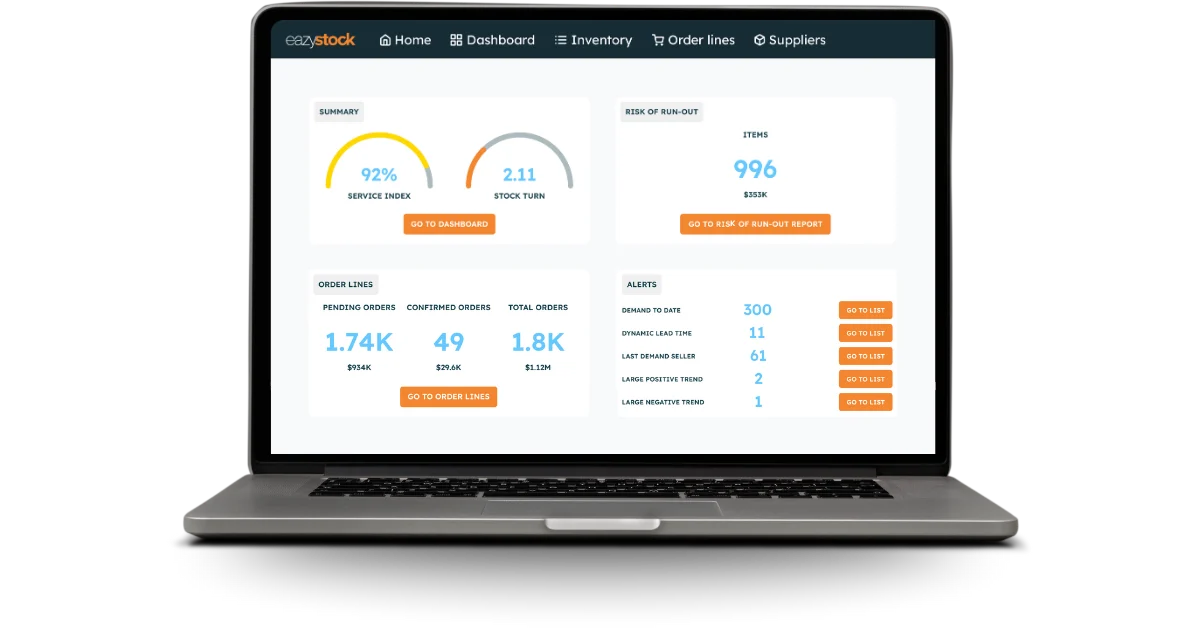
Inventory policy software helps businesses apply and maintain stocking rules across their inventory. For example, EazyStock uses demand data and inventory classification to determine appropriate service levels, safety stock, reorder points and stock levels for different products.
Inventory classification groups items by characteristics such as demand type, annual usage value, volatility, and pick frequency. These classifications enable more granular service-level targets rather than relying solely on traditional ABC analysis.
An inventory policy sets the rules for how items should be managed, including their classification, target service level, and stocking approach.
Inventory planning puts those rules into practice by determining the stock levels and replenishment requirements needed to meet demand.
The two work together: your policy provides the framework, while planning translates it into day-to-day inventory decisions.
Inventory policies should be updated when conditions affecting your inventory change. Depending on the industry and product profile, this could be daily, weekly, monthly or annually. EazyStock recalculates optimal stock levels daily, taking updated forecasts, costs and supplier constraints into account, thereby reducing reliance on static min/max policies.
By setting different stocking rules for different types of inventory, you can avoid holding unnecessary quantities of lower-priority or slow-moving items. EazyStock also flags excess and obsolete inventory, so planners can act quickly.
Yes. Inventory policies that use a classification approach allow different inventory groups to have appropriate service-level targets, providing more granular control over availability than applying the same stocking strategy to every item.
Optimise inventory across every location
Gain greater visibility into stock and demand across your network, improve inventory allocation and make better replenishment decisions with EazyStock.
Please fill out the fields below
"*" indicates required fields