6 cost-saving inventory control techniques for stock optimization

Inventory control techniques that use stock optimization best practices
Instead of focusing on how to organize warehouses, track goods, and pick and pack efficiently, this blog examines the lesser-known topic of ‘stock optimization’. Stock or inventory optimization is an inventory control technique that helps inventory managers improve their supply chain efficiency.
As inventory takes up valuable warehouse space and ties up capital, it’s essential to invest money in products that will sell so you can optimize inventory turnover and warehouse space.
In this post, we examine six inventory control techniques that will help you manage your stock levels, optimize your inventory, and maximize profits.
What is inventory control?
Inventory control involves managing and regulating the supply, storage, and distribution of stock. It is crucial in supply chain management to ensure adequate stock levels are available to meet customer demand at the lowest cost to the business.

What is stock optimization?
Stock optimization aims to have the right products in the right place at the right time in the most efficient and cost-effective way. Stock optimization (also known as inventory optimization) plays a key role in ensuring that inventory control techniques are effective. It’s the art of ensuring stock availability while reducing inventory costs and minimizing the risk of excess items. This is achieved by forecasting demand and managing supply variables while continually adjusting stock rules and inventory parameters.
6 inventory control techniques to optimize stock levels
1. Understand your demand
Our first inventory control technique focuses on demand forecasting. The key to controlling your stock levels is understanding which products to stock to meet market demand. It’s critical to invest time (and money if required) in setting up advanced inventory forecasting models that generate accurate demand forecasts. It isn’t enough to base forecasts on last year’s sales figures and expect the same this year. Effective forecasting should consider:
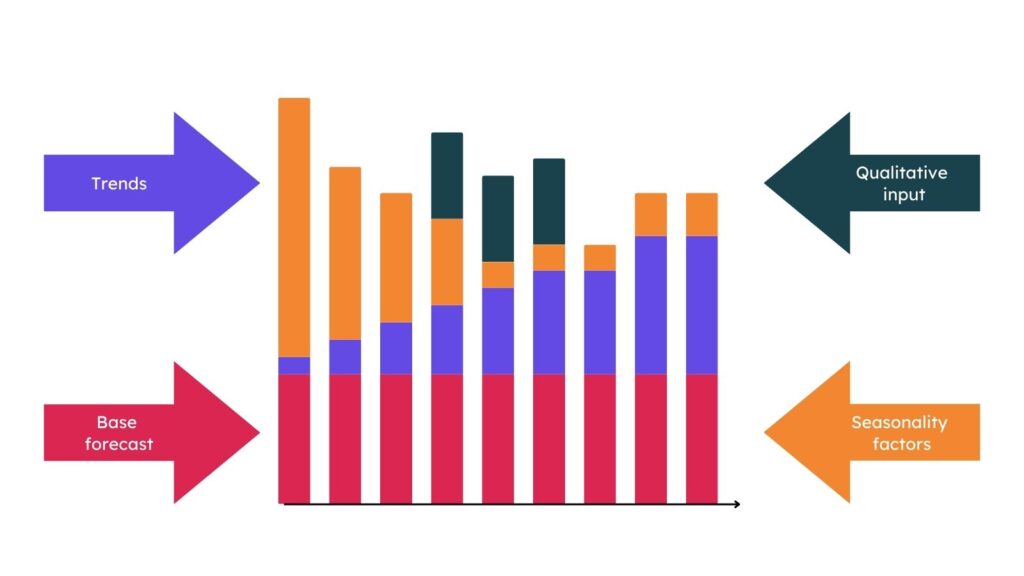
Product lifecycles: every item in your warehouse is at a specific stage in its product life cycle. Each stage affects the item’s demand pattern, so it must be considered in forecast calculations. Our blog on demand forecasting accuracy has more details.
Seasonality: identify any products in your portfolio with seasonal demand variations. It’s best practice to keep seasonal demand factors separate from your base demand calculations. This helps keep the data clean and makes forecasting easier going forward.
Trends: Product demand is influenced by fashion, technology, social, economic, and legal factors. Monitor these trends in your historical demand data and adjust your forecasts accordingly.
Qualitative factors: include any qualitative forecasting elements in your data, such as sales promotions, competitor activity, or external market events.
Improving the accuracy of your demand forecasts will improve the accuracy of your ordering. When reordering and demand profiles match, excess stock and stockouts will reduce. This will free up capital and increase revenue that would otherwise be missed due to lost sales.
Many factors drive demand variability – our eGuide has more details:
2. Know your star products!
ABC analysis is a good inventory control technique for segmenting your warehouse stock by the value it brings to the company. Each item in your warehouse has a different value in terms of the revenue it generates. There are many ways to define ‘value’, including segmenting based on sales revenue, profitability, sales volume, or annual consumption value. Choose one that suits your needs. Then divide your stock into categories: A, B, and C. ‘A’ represents the items that are critical to your business’s success, and ‘C’ represents those that are least important.
ABC classification is a simple method for identifying your essential products so you can concentrate your stock control and management time. It can also help you establish more targeted stock control parameters, as we discuss next.
It is, however, a basic framework and doesn’t consider supply and demand variables. Inventory optimization software enables more complex inventory classification by performing multi-dimensional item categorization.
Segmenting SKUs by demand, inventory turnover, and profitability provides much deeper insight into how to control your stock levels. You’ll be able to prioritise the most profitable items and reduce the number of slow-moving items to maximise space, reduce investment, and boost revenue.

3. Set stock level control policies
Inventory policies help ensure you stock the right goods in the right quantities. This is essential for effective inventory control and warehouse management, so ensure you have a set of ‘rules’ for every SKU you carry.
Inventory classification methods like ABC analysis can help with this by guiding you in setting different service levels, safety stock levels, and reordering parameters for each category.
Include a policy for reducing excess stock and removing obsolete items. Not only does excess stock negatively impact stock turnover and eat into working capital, but if it becomes obsolete, it will erode your profit margins.
Part of setting stock level control policies involves defining useful inventory KPIs. While it may sound obvious, review your current KPIs to ensure they’re contributing to meeting business objectives and enhancing efficiency, customer service, and profitability.
4. Introduce service level targets to optimize stock
A target service level measures the probability that the correct amount of an item is available when it’s requested to fulfil an order completely.
When setting target service levels, consider your customers’ expectations for availability and delivery times. For example, if a seven-day lead time is acceptable to your customers, you could lower your inventory levels and rely on smaller purchase quantities to reduce tied-up capital, or you could place on-demand orders with your suppliers if they have shorter lead times than your delivery lead time.
Remember, providing higher-than-necessary service levels costs your company money. However, failing to meet customer expectations can lead to lost sales and reputation damage. So you need to find a balance.
Service levels also influence your stock turnover rate. You should aim for higher levels on faster-moving items and lower levels for items with less demand, so you can maintain a high turnover and avoid tying up capital unnecessarily.
5. Fine-tune your stock replenishment strategies
You can only optimize stock levels if you have informed inventory purchasing practices.
Most businesses reorder either when they reach a fixed date or when stock falls to a specified level known as the reorder point. The reorder quantity is usually fixed or variable to meet a minimum or maximum stock level. Many ERP and WMS systems use one of these approaches. However, if these methods cause stockouts or excess stock, you should consider a more ‘informed’ or dynamic approach that factors the following variables:
- Demand forecasts
- Supplier lead times
- Cost-effective order quantities
Incorporating supply and demand variables into your stock replenishment strategies will improve ordering accuracy, help prevent stock build-up, and reduce capital investment.

6. Carry safety stock to reduce risk of stock outs
Safety stock, also called buffer stock, is the layer of inventory kept to prevent stockouts and back orders in situations where safety stock, also called buffer stock, is held to prevent stockouts and backorders when forecasts are exceeded or supply is delayed. Safety stock minimizes disruptions caused by demand fluctuations, supply chain disruptions, or fulfillment issues with minimal capital investment.
Many businesses using WMS and ERP systems use a basic stock days model to calculate safety stock. They typically calculate the number of days or weeks of demand and add enough buffer stock to cover any variance. For example, 4 weeks of cycle stock and 2 weeks of safety stock.
However, this “one-size-fits-all” approach assumes that all goods in the warehouse have similar demand and behaviour patterns. Which, as we’ve already discussed, is most certainly not the case. The more accurate your safety stock calculations, the less likely you are to experience out-of-stocks or overstocking situations. When calculating safety stock, the most important factors to consider are:
- The desired service level
- Forecasting accuracy
- Lead time (or delivery variation)
A sound, statistical approach to safety stock calculations maximizes customer service and minimizes inventory cost and investment.
The best inventory control methods use stock optimization tactics
It’s impossible to optimize your stock levels without considering supply and demand variables. Therefore, effective inventory control techniques rely on stock optimization strategies.
Using standard ERP or WMS systems or spreadsheets to manage stock control has functional limitations, which is where inventory optimization software comes in. Inventory optimization software automates inventory management processes to boost efficiency and reduce costs. Advanced algorithms and functionality make inventory management calculations faster and more accurate.
Cloud-based inventory optimization software integrates easily with ERP systems, enhancing inventory management capabilities and highlighting areas for improvement. With and deliver a fast return on investment.
Connecting specialist inventory optimization software eliminates the need for manual inventory classification calculations. Instead, the advanced stock classification functionality dynamically groups stock items using key properties at a more granular level to provide stock availability for each group.
Regular algorithm updates adjust forecasts, safety stock levels, and demand planning to maintain accuracy and optimal stock levels.
Optimizing inventory saves money by reducing stock levels without hurting service levels. In many cases, service levels increase thanks to improved efficiency and automated alerts for when items are at risk of stockouts.
Software like EazyStock provides an affordable way to optimize inventory management and improve efficiencies. Customers typically reduce inventory levels by 30%, resulting in 25% fewer holding costs and a 15% improvement in stock availability.
EazyStock has a unique customer support model with dedicated customer success managers for each customer. Outside the subscription fee, there aren’t any hidden costs for ongoing support or system upgrades. Our annual fee includes all customer updates and training, so you don’t need to allocate additional budget for any unexpected costs.
If you need help with your stock management, get in touch to understand how EazyStock can help you save money with a fast return on investment.
For more information on how your inventory control practices could benefit from EazyStock, or to book a demo, please get in touch.
Blog post originally published Aug 2015; updated Oct 2020, updated Dec 2025.