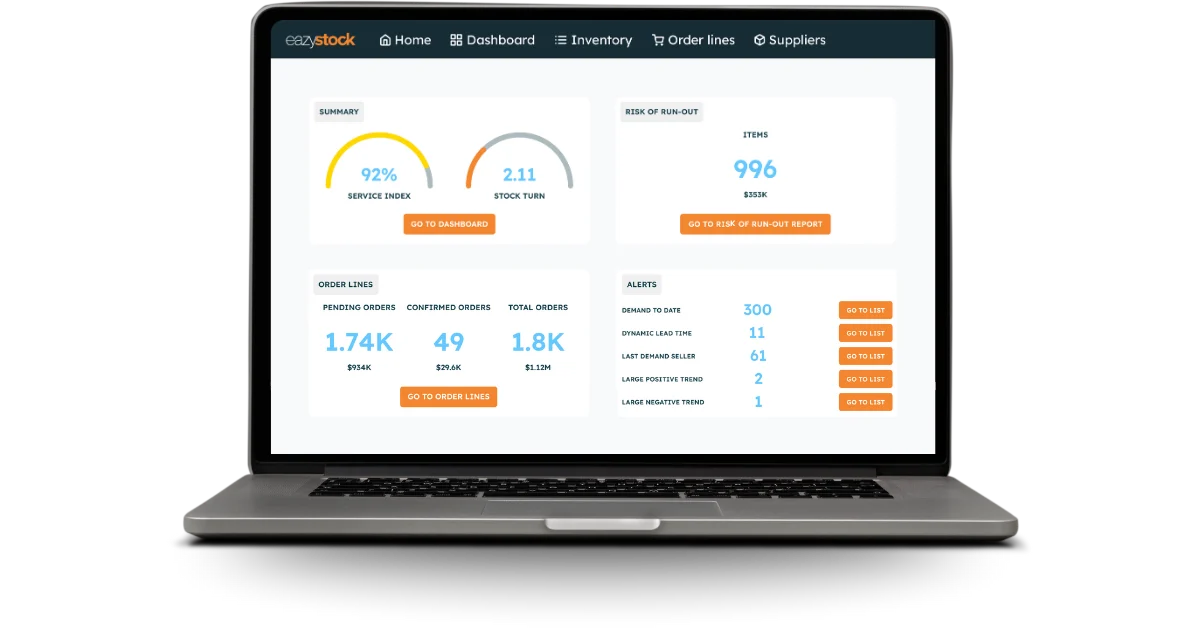
Identify demand changes earlier, respond faster to market shifts, and improve inventory decisions with AI-powered demand-sensing software. EazyStock helps supply chain and inventory teams react quickly to changing demand patterns before they become costly inventory issues.
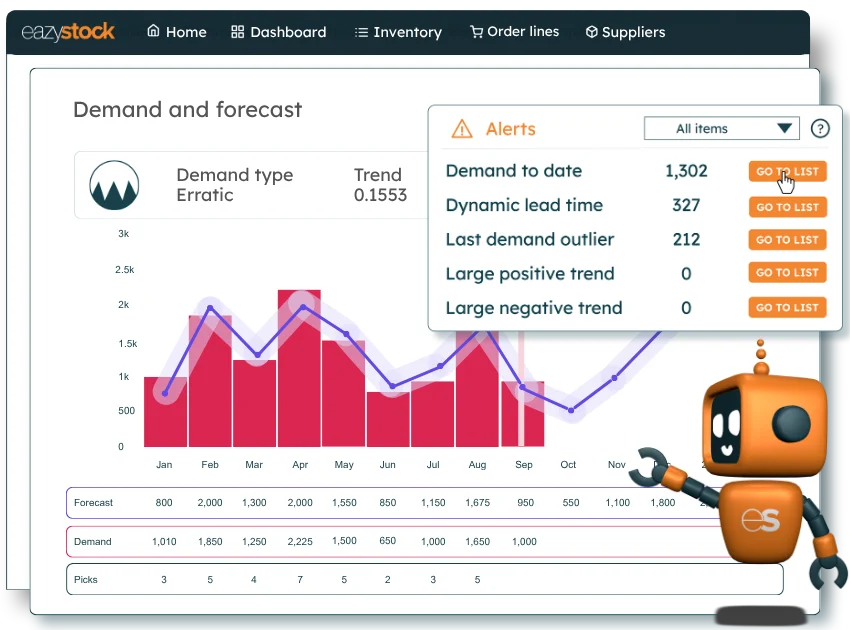
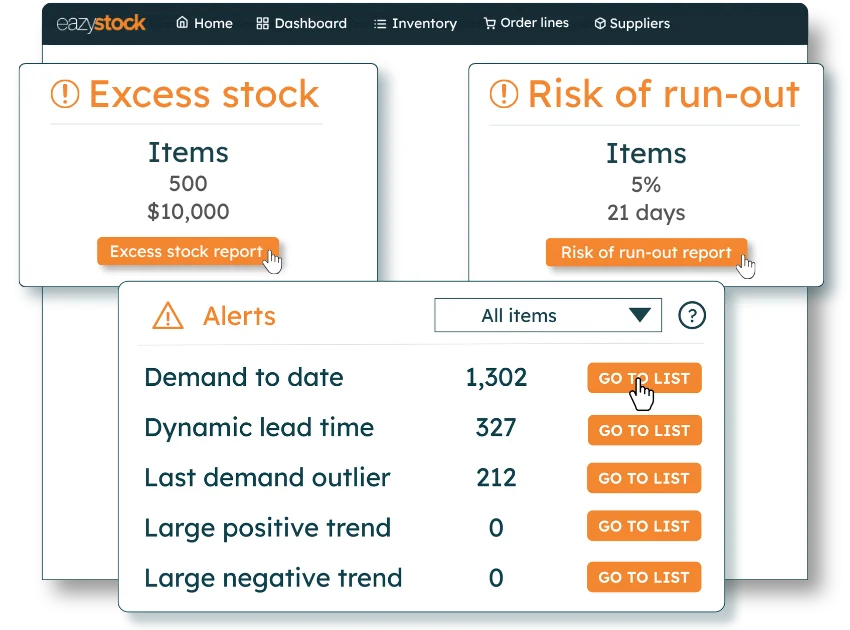
EazyStock gives inventory and supply chain teams the tools to detect shifts in demand, prioritize actions and make faster replenishment decisions. Key demand sensing features include:
Demand sensing uses recent demand data and demand signals to identify short-term shifts in customer demand. It helps inventory and supply chain teams understand what is changing now, not just what historical forecasts predicted.
By monitoring recent sales activity, demand behavior and emerging trends, demand sensing helps planners spot sudden increases, unexpected declines and rapid shifts before they escalate into larger inventory problems.
This gives teams time to adjust replenishment decisions, protect product availability and reduce the risk of excess stock.
Demand sensing software helps businesses monitor recent demand behavior, detect changes and highlight products that need attention. Instead of relying solely on historical forecasts, it uses up-to-date demand signals to support faster planning decisions, improve availability and reduce inventory risk.
Demand sensing monitors sales activity and demand behavior across products, then identifies unusual changes, such as sudden increases, declines or new trends.
The software can then flag where forecasts, inventory policies or replenishment plans may need review, helping teams respond more quickly to changing market conditions.
Demand forecasting predicts what customers are likely to buy in the future, typically by analyzing historical demand patterns.
Demand sensing focuses on what is changing now, using recent demand behavior to identify short-term shifts. Used together, they help businesses build more accurate plans and respond faster when demand changes.
In supply chain management, demand sensing helps teams identify shifts in customer demand early enough to adjust stock levels and replenishment plans.
It is particularly useful when demand is volatile, buying cycles are shorter, promotions perform differently from expectations, or seasonal demand arrives earlier or later than planned.
Demand sensing is important because demand can shift faster than traditional planning processes can keep up. By spotting changes earlier, businesses can reduce the risk of stockouts, avoid building excess inventory, improve service levels, and make more confident purchasing decisions.
Demand sensing improves inventory planning by helping teams align replenishment decisions with the latest demand data. If demand rises, teams can act before availability is affected. If demand falls, they can reduce the risk of over-ordering. This supports better stock availability, lower inventory risk and more agile planning.
Demand sensing typically draws on recent sales activity, demand history, stock levels, supplier lead times, product data, seasonality, promotions and other demand signals from your ERP or business system.
By keeping this data connected and up to date, teams can make inventory decisions based on what is happening now, not just on what happened in the past.
Yes. Demand sensing can improve forecast accuracy by identifying when demand is moving away from the original forecast. It helps planners spot unusual demand behavior, review assumptions and adjust plans before forecast errors lead to stockouts, excess inventory or missed sales.
EazyStock helps businesses respond to demand changes by connecting to ERP data, monitoring demand behavior and highlighting products that need attention.
It identifies unusual demand increases, declines and emerging trends, then supports smarter replenishment and inventory decisions, helping teams reduce stockouts, excess inventory and manual analysis.
See how EazyStock enhances ERP capabilities to help your team:
Please fill out the fields below:
"*" indicates required fields