Seasonal demand forecasting
Turn seasonal peaks into opportunity
Forecast seasonal demand more accurately, stock the right products at the right time, and avoid costly stockouts and excess inventory with AI-powered seasonal forecasting software.
Turn seasonal peaks into opportunity
Forecast seasonal demand more accurately, stock the right products at the right time, and avoid costly stockouts and excess inventory with AI-powered seasonal forecasting software.
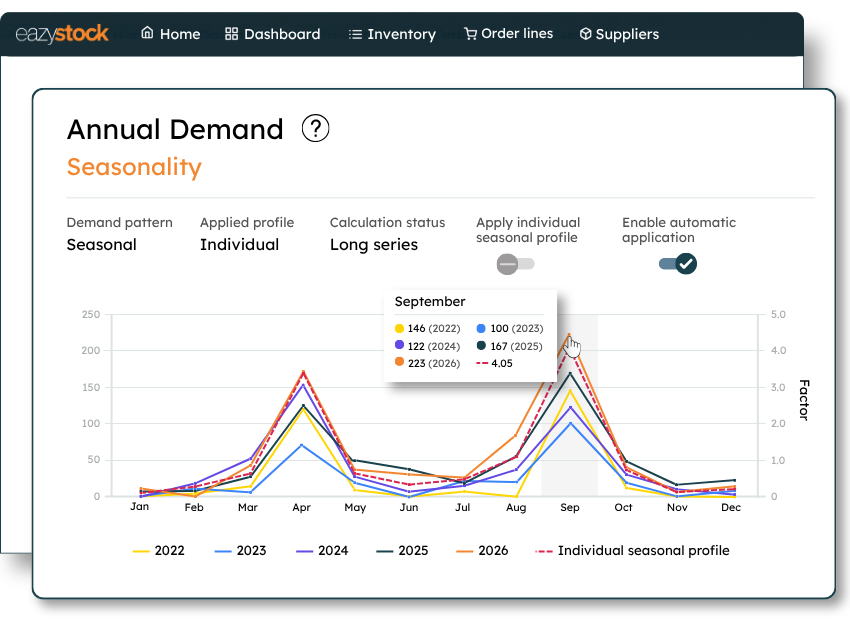
Seasonal forecasting is a type of demand forecasting that predicts future demand for items with recurring seasonal patterns.
By identifying demand changes linked to specific times of year, events, weather conditions or buying cycles, businesses can plan stock, purchasing and replenishment around expected peaks and dips, reducing the risk of stockouts and excess inventory.
Seasonal forecasting software helps businesses predict changes in demand that happen at certain times of the year, such as Christmas, Black Friday, summer peaks, school holidays, Easter or weather-related trends. It analyzes historic sales data to identify recurring patterns, then uses them to forecast future demand, plan stock levels and improve replenishment decisions.
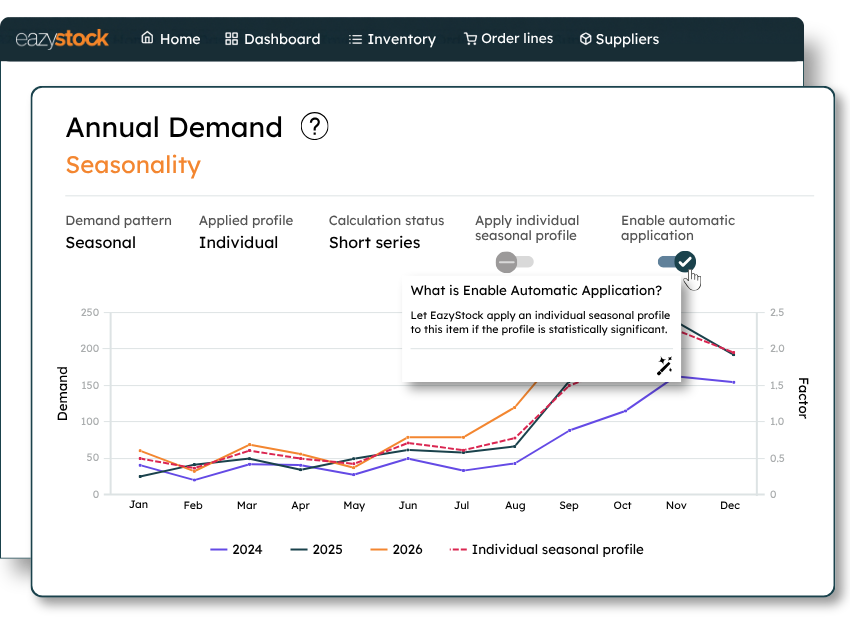
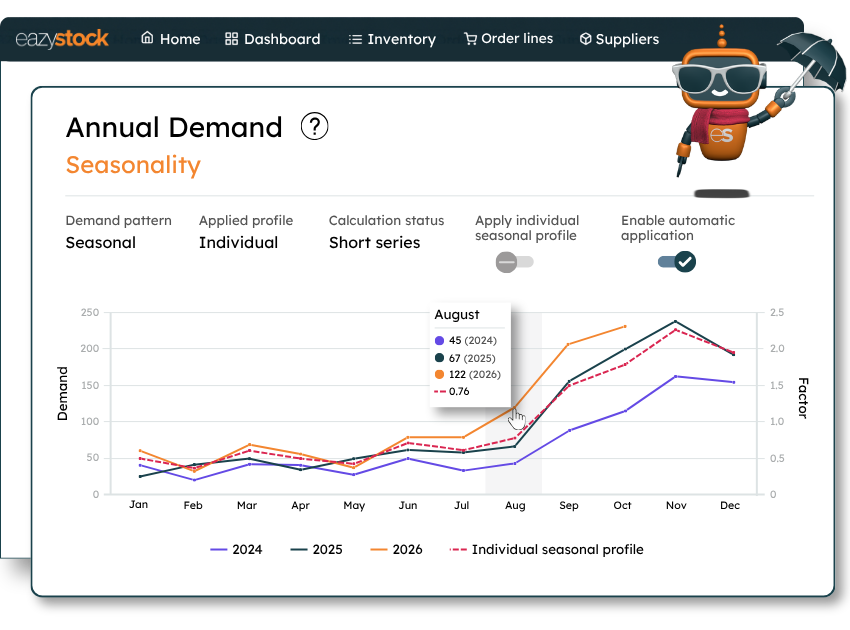
EazyStock supports this by automatically identifying seasonal profiles, applying the right forecasting methods and recommending replenishment quantities so you can prepare for demand peaks without overstocking.
Seasonal forecasting is important because it helps businesses prepare for predictable peaks and dips in demand. By forecasting seasonal demand accurately, inventory teams can buy the right quantities at the right time, reduce stockouts during busy periods and avoid being left with excess stock once the season ends.
Seasonal demand is a recurring change in customer demand linked to a specific time of year, event, weather pattern or buying cycle. For example, demand for heating products may rise in winter, while garden products, air conditioning parts or outdoor equipment may peak in spring and summer.
Seasonal demand can be caused by weather, holidays, promotions, industry events, school terms, financial cycles, customer buying habits or planned product launches. These patterns often repeat every year, but the size and timing of the peak can still change, which is why continuous forecasting is so beneficial.
You can identify seasonal demand by analyzing historical sales data, looking for recurring peaks and troughs, and comparing demand patterns across products, locations and time periods. Seasonal demand forecasting software makes this easier by automatically detecting repeat patterns and applying the right seasonal profile to each item.
Yes. Seasonal forecasts should be adjusted over time as new demand data becomes available. EazyStock updates forecasts to reflect changes in sales trends, customer behavior, lead times and seasonality, helping inventory teams keep their replenishment plans accurate.
EazyStock forecasts seasonal demand by connecting to your ERP, analyzing historical demand data, identifying seasonal patterns and creating demand profiles for each item. It then adjusts forecasts and recommends replenishment quantities so you can stock up ahead of seasonal peaks and reduce leftover inventory afterwards.
For new products with limited sales history, EazyStock can use demand patterns from similar items, product groups or historical seasonal profiles to build a more reliable forecast. This helps teams plan launch stock and replenishment more confidently, even when they don’t have enough product-level data.
Seasonal forecasting software is useful for any industry where demand changes throughout the year, including wholesale distribution, retail, manufacturing, automotive, HVAC, electrical supplies, food and beverage, building materials, spare parts, and consumer goods. It is especially valuable for businesses managing large product ranges or long supplier lead times.
Seasonal sales forecasting is the process of predicting future sales based on recurring seasonal patterns. It helps businesses understand when sales are likely to rise or fall, so they can plan purchasing, stock levels, warehouse capacity and promotions more effectively.
Seasonal forecasting typically needs historical sales or demand data, product information, lead times, stock levels, supplier constraints and any known events that may affect demand. The more reliable the data, the easier it is to identify seasonal patterns and build accurate forecasts.
See how EazyStock enhances ERP capabilities to help your team:
Please fill out the fields below:
"*" indicates required fields
Visit your local website for products and services specific to your country.